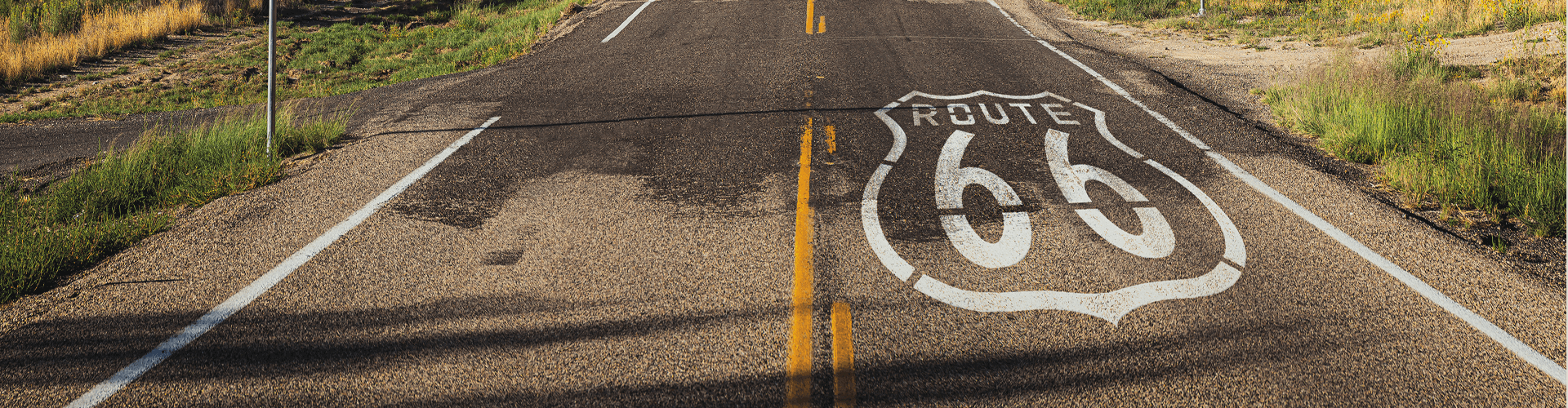
Why is Route 66 so famous and popular?
May 5th 2026
Why Route 66 Still Captivates Travelers from Around the World
Table of Contents
- Introduction
- The Literary Highway: Route 66 in Books and Popular Culture
- American Mythology Made Visible: Why Route 66 Symbolizes Freedom
- American Nostalgia: Preserving a Golden Age
- Authentic America: Small Towns, Roadside Giants, and Real People
- Landscapes That Tell American Stories
- The Slow Travel Philosophy: Route 66 Rewards Patience
- Route 66 as Pilgrimage: Personal Transformation Through Travel
- Digital Age Discovery: Social Media and Route 66's Resurgence
- Why Route 66 Endures: The Universal Appeal of American Optimism
- Planning Your Route 66 Adventure
- Conclusion: The Mother Road Awaits
Introduction
Route 66 officially ended in 1985 when the final bypass opened in Williams, Arizona. Yet nearly 40 years later, the Mother Road attracts more visitors than ever. Families book El Monte RV rentals a year in advance. Photographers plan month-long journeys to capture every roadside giant. Retirees fulfill lifelong dreams of driving America's most famous highway.
What makes Route 66 irresistible to travelers worldwide? The answer combines authentic American culture, literary mythology, stunning landscapes, and the universal appeal of freedom on the open road. Route 66 represents more than a drive from Chicago to Santa Monica, it's a 2,448 mile immersion in American history, creativity, and the enduring belief that the journey matters as much as the destination.
The Literary Highway: Route 66 in Books and Popular Culture
Route 66's global fame began with literature. Long before social media made the Blue Whale of Catoosa or Cadillac Ranch viral sensations, writers transformed this highway into American mythology that transcended borders and languages.
Steinbeck's "Mother Road"
John Steinbeck's The Grapes of Wrath (1939) gave Route 66 its most enduring nickname. The Joad family's desperate migration from Oklahoma's Dust Bowl to California follows Route 66 across landscapes of hardship and hope. Steinbeck wrote:
"66 is the path of people in flight, refugees from dust and shrinking land... 66 is the mother road, the road of flight."
This passage resonates internationally because it captures universal themes: displacement, hope, and families seeking better futures. Travelers worldwide cite Steinbeck as inspiration for their Route 66 journeys, following the Joads' path decades later with dog-eared paperbacks and highlighted passages.
Kerouac and the Beat Generation
Jack Kerouac's On the Road (1957) presented American highways, including Route 66, as paths to spiritual discovery through constant motion. His famous line, "Nothing behind me, everything ahead of me, as is ever so on the road," captures what travelers seek: freedom to leave the past behind and embrace uncertain futures.
The Beat Generation's celebration of spontaneous travel influenced how global audiences understand American road culture. Counterculture movements worldwide embraced Kerouac's vision, and those influences persist today in travelers who arrive seeking transformative journeys.
Bobby Troup's Musical Map
Bobby Troup's song "Get Your Kicks on Route 66" transformed geography into poetry. The lyrics name cities along the route, St. Louis, Joplin, Oklahoma City, Amarillo, creating a musical roadmap recognized worldwide. Nat King Cole's version became a hit across continents, introducing Route 66 to audiences who would never see Oklahoma or Arizona firsthand.
Pixar's Cars (2006) introduced Route 66 to new generations through animation, sparking renewed interest in the actual highway with its message about slowing down and valuing community over efficiency.
American Mythology Made Visible: Why Route 66 Symbolizes Freedom
Route 66 taps into deep American mythologies that resonate internationally because they promise something rare: the possibility of reinvention.
The Westward Journey
Route 66's Chicago-to-California route follows America's westward expansion mythology. Moving west means following the sun, chasing dreams, pursuing opportunity. California represented the Promised Land where anything seemed possible.
The highway democratized westward migration. You didn't need wagon trains or months of dangerous travel. You needed a car, some money, and the courage to start driving. Travelers worldwide understand this symbolism, driving Route 66 west means participating in foundational American mythology.
The Open Road as Liberation
Route 66 represents specifically American freedom: the ability to drive wherever you want, whenever you want, for whatever reason strikes your fancy. No checkpoints, no borders, no permissions required.
This freedom appeals especially to visitors from densely settled landscapes who experience liberation in empty stretches where you can drive an hour without seeing another car. Travelers from rigidly structured societies find joy in Route 66's permission to prioritize spontaneity over schedules.
An El Monte RV rental embodies this freedom perfectly. Your hotel travels with you. See something interesting? Pull over and stay. The flexibility transforms travel from rigid itineraries into a genuine adventure.
American Nostalgia: Preserving a Golden Age
Route 66 functions as America's most accessible time machine, preserving a specific moment in cultural history that never quite existed as perfectly as memory suggests, yet feels more real than documented fact.
The highway's golden age lasted roughly from 1946 to 1970, bracketed by post-war prosperity and the completion of the interstate highway system. During these decades, American families discovered leisure travel, middle-class incomes supported vacation road trips, and the open road symbolized freedom rather than commuting drudgery. Route 66 became the artery connecting this prosperity, carrying families west in wood-paneled station wagons toward California dreams.
The Myth of Simpler Times
Modern travelers romanticize this era: when gas station attendants checked oil and washed windshields, when diners served homemade pie and waitresses knew regulars by name, when motor courts featured personal service and individual cottage-style rooms. Route 66 preserves fragments of this service culture that disappeared when efficiency replaced hospitality.
The nostalgia isn't entirely false. Small-town Route 66 businesses genuinely operated differently from modern corporations. Owners lived in their communities, served neighbors and travelers equally, and took personal pride in quality and service. The economic model required excellence because reputation mattered more than brand recognition.
Mid-Century Design: The Visual Language of Optimism
Route 66's preserved architecture and signage represent a mid-century design philosophy that believed the future would be spectacular. Googie architecture features angular roofs, starbursts, boomerangs, and atomic symbols. Coffee shops look like spaceships. Gas stations feature dramatic canopies suggesting flight and speed.
This design language communicated optimism about technology, progress, and American prosperity. The Space Age influenced everything, hence roadside giants holding rockets and neon signs incorporating planetary orbits. Nuclear energy promised unlimited power, making atomic symbols decorative motifs rather than warnings.
Neon signs reached their artistic peak during Route 66's golden age. Cities competed through illuminated spectacle, and businesses invested in elaborate custom signage that doubled as outdoor sculpture. Tucumcari's neon corridor preserved this aesthetic, allowing modern travelers to experience nighttime highway travel when colorful lights transformed ordinary buildings into glowing landmarks.
Main Street America: Community Life Before Corporate Homogenization
Route 66 passed directly through downtowns, making the highway each town's Main Street. Businesses faced the road, creating a continuous commercial corridor. Travelers saw how communities lived, with courthouse squares, local shops, neighborhood churches and residential streets.
The interstate bypass changed this fundamentally. New highways routed around towns, placing exits miles from downtown. Businesses followed traffic to highway interchanges, leaving historic centers economically stranded. Chain restaurants and motels clustered at exits, creating identical landscapes across America.
Preserved Route 66 towns maintain distinctiveness. Cuba, Missouri's downtown murals tell local stories. Seligman, Arizona's shops reflect individual owner personalities. Williams, Arizona's businesses, embrace mountain town character. These communities offer alternatives to the standardized corporate America visible at every interstate exit.
Authentic America: Small Towns, Roadside Giants, and Real People
Visitors often experience America through major cities or theme parks. Route 66 offers something different: authentic small-town America, where diners serve recipes unchanged for 70 years and communities preserve heritage through grassroots efforts.
Roadside Creativity and Democratic Art
Route 66's roadside giants represent folk art created by ordinary people with extraordinary vision. Hugh Davis built the Blue Whale of Catoosa as an anniversary gift for his wife. The Gemini Giant advertised a drive-in restaurant in Wilmington, Illinois. Artists buried ten Cadillacs nose-down near Amarillo to critique and celebrate American car culture simultaneously.
This democratic creativity fascinates visitors worldwide. You didn't need formal training, museum backing, or critical approval to create something wonderful. Anyone with vision, materials, and roadside property could build monuments that still attract travelers decades later.
Many cultural traditions separate high art from commercial culture. Route 66 blurs these boundaries beautifully. A 28-foot fiberglass spaceman holding a rocket ship is simultaneously advertising, sculpture, and cultural landmark.
Living History in Preserved Communities
Route 66's preservation represents successful grassroots cultural heritage efforts. When Interstate 40 bypassed the highway, communities faced economic devastation. Angel Delgadillo in Seligman, Arizona, sparked a preservation movement that spread across eight states.
Today's Route 66 remains a living history rather than a museum display. The Cozy Dog Drive In in Springfield, Illinois, still serves the corn dogs they invented in 1946, operated by the same family. Tucumcari, New Mexico, maintains vintage neon signs advertising "100% Refrigerated Air." The Blue Swallow Motel still rents rooms beneath its iconic neon sign.
This authenticity matters to visitors who recognize the difference between preserved heritage and manufactured nostalgia. Route 66's imperfections, crumbling pavement, faded signs, closed businesses, prove its legitimacy. The highway wasn't restored as a tourist attraction but preserved by communities that refused to let their history disappear.
Landscapes That Tell American Stories
Route 66's 2,448 miles cross dramatic landscape changes that reveal America's geographic diversity. Each day brings different scenery, different climates, and different cultural influences.
From the Midwest to the Desert
The journey begins in Chicago's urban density, transitions through Illinois and Missouri farmland, opens into Oklahoma and Texas plains, climbs into New Mexico's high desert, passes through Arizona's mountains and painted deserts, then descends through the Mojave to California's Pacific coast.
Travelers experience America's true scale through these landscape transitions. Visitors from densely populated regions discover horizons that stretch impossibly far. Route 66 crosses distinct American regions, each with a unique character: the Midwest offers agricultural heritage and Lincoln history, Oklahoma celebrates Native American culture and oil industry legacy, Texas brings cowboy mythology and BBQ traditions, New Mexico blends Spanish, Native American, and Anglo cultures, Arizona showcases desert beauty and Grand Canyon proximity, and California promises beaches and Hollywood dreams.
This diversity means Route 66 never feels monotonous. Every day reveals new landscapes, new architecture, new food traditions, and new stories.
The Slow Travel Philosophy: Route 66 Rewards Patience
Modern tourism often emphasizes efficiency, maximum attractions in minimum time. Route 66 demands the opposite. The highway rewards slow travel, spontaneous stops, and conversations with strangers.
This philosophy aligns with travelers who increasingly reject rushed tourism. Visitors worldwide appreciate Route 66's permission to slow down and actually experience places rather than checking boxes.
Traveling by El Monte RV naturally encourages this slower pace. Without the need to coordinate hotel check-ins or restaurant reservations, you wake when rested, prepare breakfast at your leisure, and start driving when ready. The self-contained nature of RV travel, the complete kitchen, bathroom, and sleeping quarters, removes external time pressures that typically dictate vacation schedules.
Campgrounds become meeting places where photographers share tips with retirees, and families exchange recommendations with couples. The shared experience of driving the Mother Road creates instant community across borders and backgrounds.
Route 66 as Pilgrimage: Personal Transformation Through Travel
For many visitors, Route 66 transcends tourism and becomes a pilgrimage—a journey undertaken for personal meaning and cultural understanding rather than sightseeing alone.
The Ritual of Long-Distance Travel
Route 66's length creates a natural rhythm. Days develop patterns: early departures, midday roadside attractions, afternoon drives through changing landscapes, and evening campground arrivals with stories shared around picnic tables. This repetition becomes meditative, creating space for reflection impossible during compressed vacations.
Disconnection and Presence
Route 66's remote sections offer genuine disconnection from digital life. Cell service disappears for hours across Oklahoma plains and the New Mexico desert. The absence of constant connectivity forces travelers to engage with their immediate surroundings rather than digital distractions. Without phones as escape routes, people actually talk, with travel companions, with locals, with fellow campground guests.
Digital Age Discovery: Social Media and Route 66's Resurgence
Social media transformed Route 66's global profile. Instagram and TikTok turned roadside giants into viral destinations. A photograph at Cadillac Ranch or the Blue Whale signals authentic American travel rather than generic tourism.
The highway's visual culture translates perfectly to social media. Oversized attractions photograph spectacularly. Vintage neon creates moody nighttime images. Desert sunsets provide epic backdrops. Route 66's aesthetic was designed for photography long before Instagram existed, modern platforms simply amplified what the highway always offered.
Travel influencers create detailed guides in multiple languages, helping global audiences navigate Route 66's complexities while maintaining its spirit of adventure.
Why Route 66 Endures: The Universal Appeal of American Optimism
Route 66 survives because it represents something increasingly rare: unabashed optimism and creative excess without apology. The roadside giants, neon signs, and concrete whales celebrate joy, creativity, and the distinctly American conviction that bold vision deserves bold expression.
Travelers worldwide connect with this preserved optimism. Route 66's mid-century aesthetic represents a time when Americans believed anything was possible and expressed that belief through fiberglass spacemen and buried Cadillacs. In an era of cynicism and irony, Route 66's earnest enthusiasm feels refreshing.
The highway also proves that communities can preserve cultural heritage through grassroots efforts when governments and corporations won't. Volunteers repaint the Blue Whale. Local historians document stories. Small museums preserve artifacts. This community preservation resonates with travelers who value cultural continuity.
Planning Your Route 66 Adventure
Travelers should allow 10-14 days for the complete Route 66 experience from Chicago to Santa Monica. This timeline permits comfortable daily distances (200-250 miles) with time for attractions, spontaneous stops, and the conversations that define the journey.
Best Travel Seasons
Spring (April-May): Ideal temperatures, wildflowers blooming, manageable crowds
Fall (September-October): Comfortable weather, spectacular light, fewer tourists
Summer (June-August): Peak season with full services but extreme desert heat (100°F+)
Winter (November-March): Lowest rates but potential snow in Flagstaff
RV Selection
Class C motorhomes balance comfort and maneuverability, perfect for Route 66's mix of highways and small-town streets. They sleep 4-6 people comfortably with full kitchens and bathrooms.
Class A motorhomes deliver maximum comfort for longer journeys but may struggle with tight vintage parking lots in smaller towns.
Class B campervans offer efficiency and flexibility, ideal for couples prioritizing fuel economy and easy parking.
Every El Monte RV rental comes equipped with unlimited generator use—essential for powering air conditioning during desert crossings and keeping devices charged in remote areas. Base mileage allowances, full kitchen equipment, and 24/7 roadside assistance provide peace of mind throughout your journey. Reserve vehicles 3-6 months ahead for peak season travel.
Check Travel Extras for additional mileage packages, kitchen kits, bedding, and outdoor furniture to customize your journey.
Essential Considerations
Route 66 crosses multiple climate zones with temperature variations of 40°F in a single day. Pack layers including lightweight desert clothing, fleece for mountain elevations, rain gear for afternoon thunderstorms, and sun protection.
Stock groceries and supplies in major cities (Chicago, St. Louis, Oklahoma City, Amarillo, Albuquerque, Flagstaff), as rural sections have limited services and higher prices. Fill fuel tanks at half capacity rather than waiting for empty.
Budget approximately $800-$1,200 for fuel covering the full 2,448 miles, depending on RV class. Campground fees average $30-50 per night. Many Route 66 attractions are free, with museums typically charging $5-15 admission.
Conclusion: The Mother Road Awaits
Route 66 captivates travelers worldwide because it delivers an authentic American experience impossible to find elsewhere. The highway combines literary mythology with visible history, creative folk art with stunning landscapes, small-town hospitality with the freedom of endless horizons.
Visitors fall in love with Route 66 because the roadside giants make them smile, vintage diners serve honest food, vast landscapes reveal America's true scale, and the freedom to follow curiosity wherever it leads represents liberty in its purest form.
The Mother Road endures not through government mandate or corporate marketing but through genuine love from travelers worldwide who recognize its cultural significance. Route 66 represents American optimism, democratic creativity, and the belief that journeys matter as much as destinations.
Ready to experience Route 66's magic? Explore RV options at El Monte RV Rentals and check current promotions at Rental Deals. The Mother Road has been waiting since 1926, welcoming everyone who understands that the best journeys measure meaning rather than miles.