Overview
The Mother Road calls to wanderers, dreamers, and adventurers seeking authentic American experiences. Stretching 2,448 miles from Chicago's bustling streets to Santa Monica's sun-soaked pier, Route 66 tells the story of a nation on the move. This 10-day itinerary strikes the perfect balance: unhurried enough to discover hidden gems, yet structured enough to cover this legendary highway's entire length.
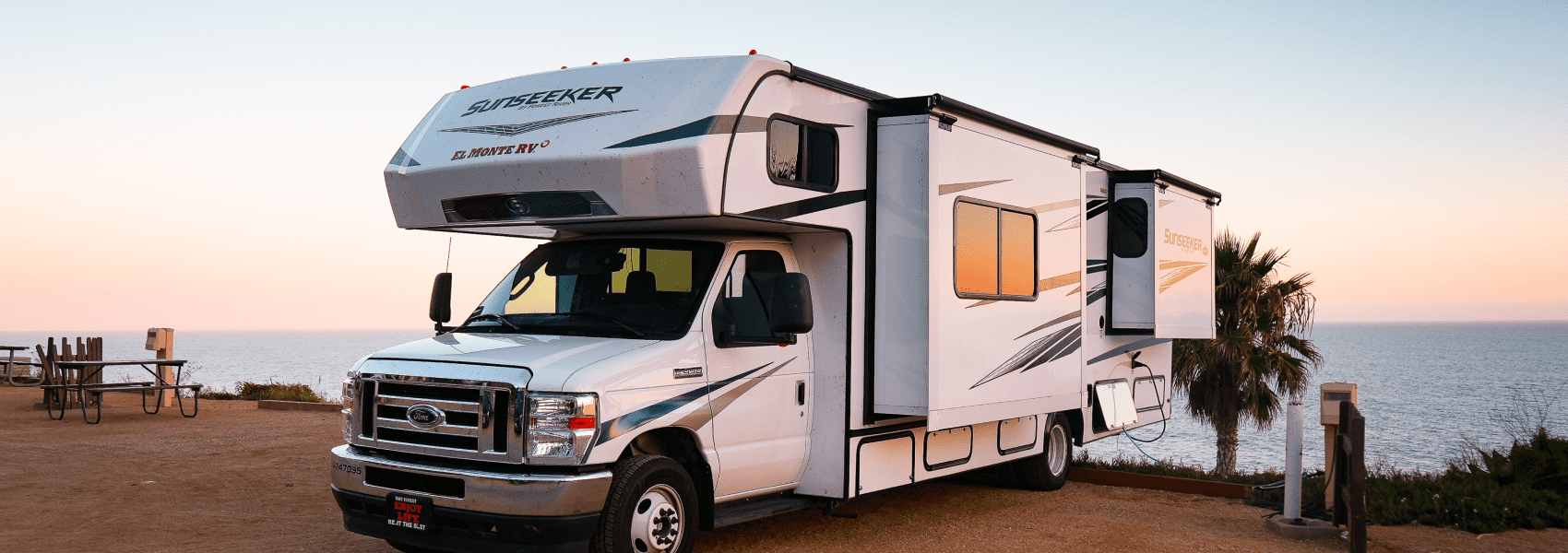
A ten-day Route 66 journey allows you to linger over morning coffee at vintage diners, explore natural wonders, and chat with locals who keep the highway's spirit alive. An El Monte RV gives you the freedom to wake up in Illinois farmland, spend midday exploring Oklahoma plains, and fall asleep under New Mexico stars (all with the comforts of home traveling alongside you).

Trip Details
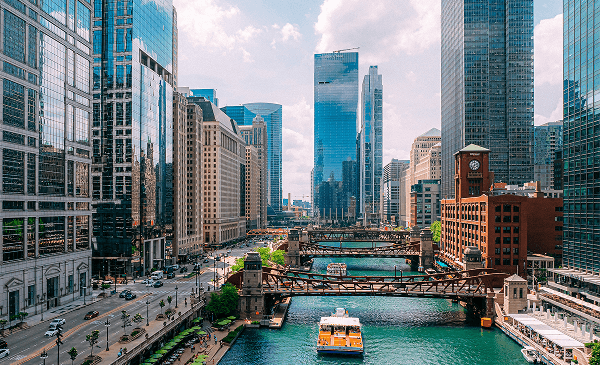
Find the official Route 66 "Begin" sign at Adams Street and Michigan Avenue for your first photo. As Chicago's skyline fades, Illinois’ farmland unfolds in geometric patterns of corn and soybean fields.
Wilmington introduces you to Route 66's quirky roadside culture. The Gemini Giant (a 28-foot green spaceman clutching a silver rocket) guards the defunct Launching Pad Drive-In. Built in 1965, this fiberglass guardian represents mid-century roadside optimism.
Pontiac offers the Route 66 Association Hall of Fame & Museum. Vintage gas pumps, hand-painted road signs, and a restored 1940s streetscape bring the highway's golden age to life.
Springfield mixes Lincoln history with Route 66 nostalgia. The Cozy Dog Drive-In invented America's corn dog in 1946. The family still runs the restaurant, serving hot dogs dipped in cornmeal batter and fried golden brown.
Overnight: Springfield KOA Holiday
Day 1 Highlights
- Lou Mitchell's breakfast (Chicago)
- Gemini Giant (Wilmington)
- Route 66 Hall of Fame & Museum (Pontiac)
- Cozy Dog Drive In (Springfield)
St. Louis demands a stop at Ted Drewes Frozen Custard for their legendary "concrete" (frozen custard so thick it's served upside down without spilling). The original location has been operating since 1929.
Missouri's landscape transforms into rolling Ozark foothills covered with oak and hickory forests. Cuba proclaims itself "Route 66 Mural City" with over a dozen massive murals depicting the highway's history. The Wagon Wheel Motel still operates with its magnificent vintage neon sign.
The day's highlight awaits outside Cuba: Meramec Caverns. This spectacular limestone cave system extends through seven levels, showcasing massive formations including "Stage Curtains" (flowstone resembling draped velvet). Jesse James allegedly hid in these caves between robberies.
Overnight: Meramec Caverns Campground
Day 2 Highlights
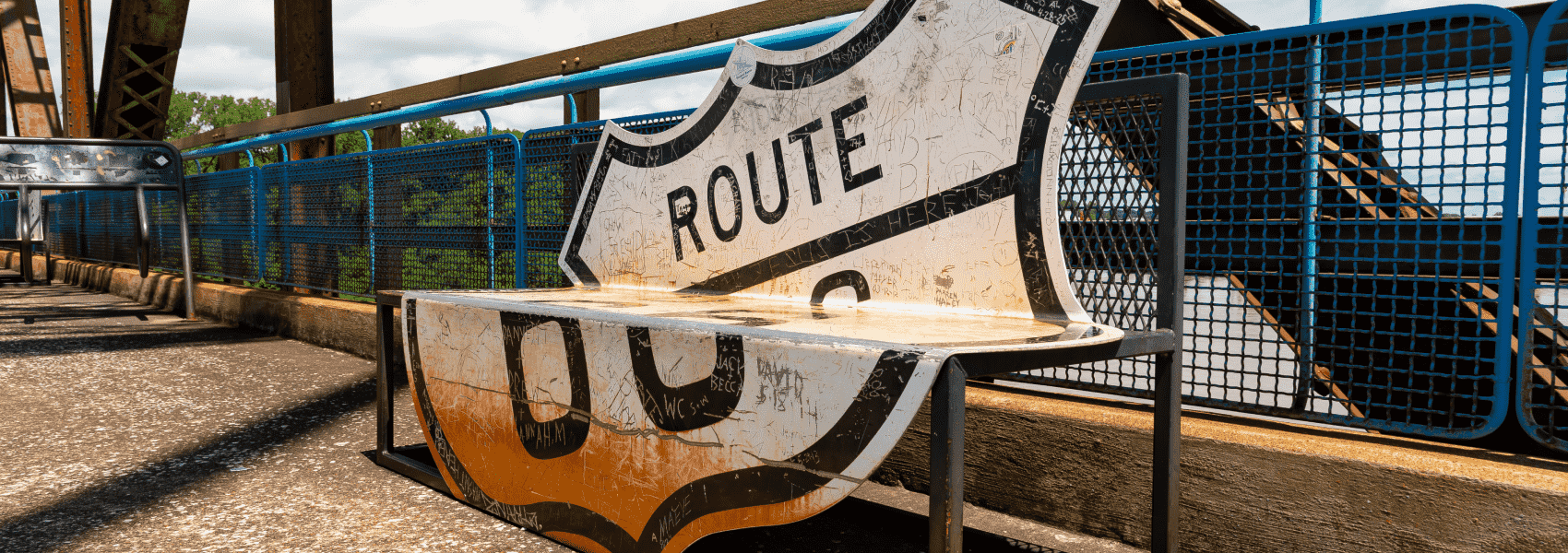
- Chain of Rocks Bridge (Madison, IL)
- Ted Drewes Frozen Custard (St. Louis)
- Cuba murals (Cuba)
- Meramec Caverns (Sullivan)
The landscape opens dramatically into Great Plains country. Catoosa delivers the Blue Whale, built in the 1970s as an anniversary gift. This massive concrete whale remains beloved, with volunteers regularly repainting it.
Tulsa represents Oklahoma's most cosmopolitan city, built on oil wealth. Buck Atom's Cosmic Curios embraces retro space-age aesthetics with a towering spaceman statue. The Greenwood District preserves the legacy of "Black Wall Street" through the Greenwood Rising History Center.
Overnight: Tulsa RV Ranch
Day 4 Highlights
- Cars on the Route (Galena, KS)
- Blue Whale of Catoosa (Catoosa)
- Buck Atom's Cosmic Curios (Tulsa)
- Greenwood Rising History Center (Tulsa)
The landscape opens dramatically into Great Plains country. Catoosa delivers the Blue Whale, built in the 1970s as an anniversary gift. This massive concrete whale remains beloved, with volunteers regularly repainting it.
Tulsa represents Oklahoma's most cosmopolitan city, built on oil wealth. Buck Atom's Cosmic Curios embraces retro space-age aesthetics with a towering spaceman statue. The Greenwood District preserves the legacy of "Black Wall Street" through the Greenwood Rising History Center.
Overnight: Tulsa RV Ranch
Day 4 Highlights
- Cars on the Route (Galena, KS)
- Blue Whale of Catoosa (Catoosa)
- Buck Atom's Cosmic Curios (Tulsa)
- Greenwood Rising History Center (Tulsa)
Arcadia brings contemporary roadside spectacle: POPS. The 66-foot LED soda bottle sculpture changes colors throughout the day. Inside, over 700 varieties of soda from around the world fill coolers.
Stroud hosts the Rock Cafe, built from creek bed stones in 1939. This authentic diner survived a 2008 fire thanks to community support.
Oklahoma City sprawls across the prairie as Oklahoma's capital. The Oklahoma City National Memorial honors the 168 victims of the 1995 bombing with empty chairs and the Survivor Tree symbolizing resilience.
Overnight: Oklahoma City East KOA
Day 5 Highlights
The Texas state line brings immediate changes. Shamrock features the magnificent U-Drop Inn, one of Route 66's most photographed buildings. The Art Deco structure, built in 1936, has been restored to its original glory.
McLean preserves the Devil's Rope Museum, dedicated to barbed wire history. This revolutionary technology transformed the American West by allowing farmers to fence vast prairies.
Groom presents the "Leaning Tower of Texas" (a water tower intentionally built at an angle) and a 190-foot cross visible for miles.
Amarillo brings Texas personality. The essential stop awaits west of town: Cadillac Ranch. Ten Cadillacs buried nose-down create an interactive art installation. Visitors bring spray paint and add their mark to a constantly evolving artwork.
Overnight: Amarillo KOA Journey
Day 6 Highlights
- Oklahoma Route 66 Museum (Clinton)
- U-Drop Inn (Shamrock, TX)
- Devil's Rope Museum (McLean, TX)
- Leaning Tower of Texas (Groom, TX)
- Cadillac Ranch (Amarillo)
Santa Rosa's Blue Hole (an 81-foot-deep natural artesian spring) maintains a constant 64°F temperature, making it popular for scuba diving and swimming.
Today's route detours north to Santa Fe, America's oldest capital (founded 1610). Santa Fe's plaza features adobe buildings, with the Palace of the Governors portal hosting Native American artisans (the longest continuously operating marketplace in America). Canyon Road stretches through the arts district with over 100 galleries. New Mexican cuisine reaches its finest expression here, with red and green chile seasoning nearly everything.
Overnight: Santa Fe Skies RV Park or Enchanted Trails RV Park
Day 7 Highlights
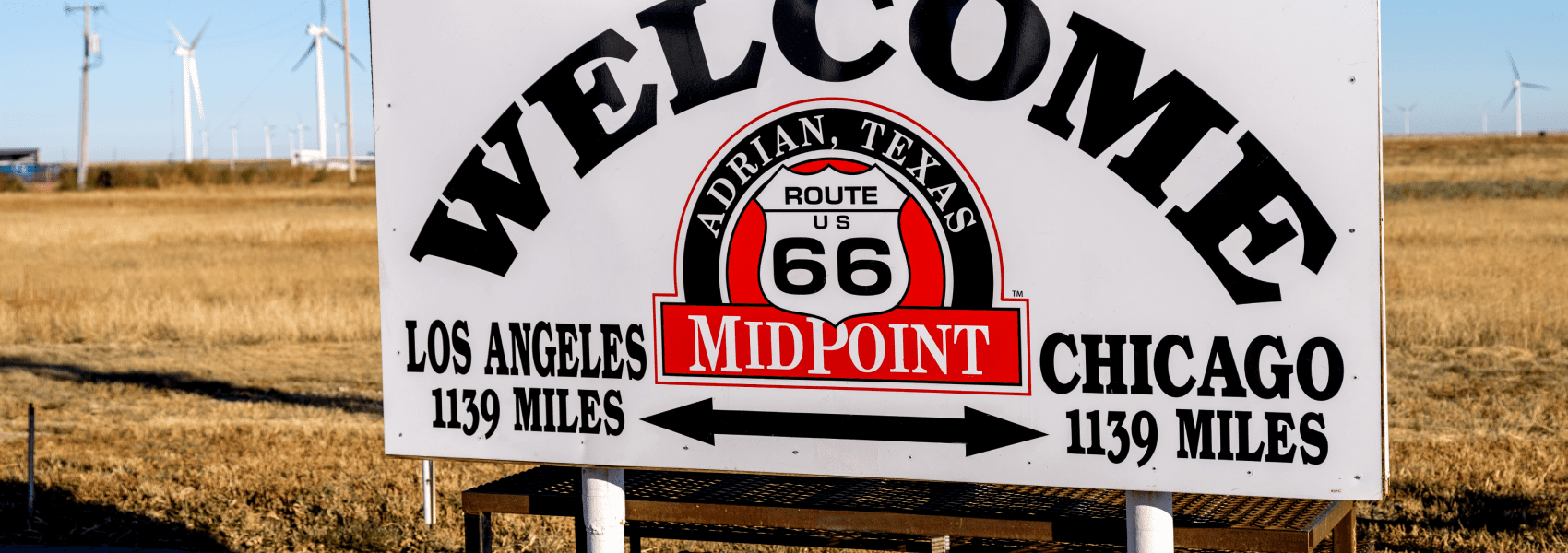
- Midpoint Café (Adrian, TX)
- Blue Swallow Motel (Tucumcari, NM)
- Blue Hole (Santa Rosa, NM)
- Santa Fe Plaza (Santa Fe, NM)
- Canyon Road galleries (Santa Fe, NM)
West of Albuquerque, El Malpais National Monument protects volcanic badlands where lava flows created otherworldly landscapes. Black basalt contrasts dramatically with blue skies.
The Petrified Forest National Park protects the world's largest concentration of petrified wood (ancient trees transformed to stone over 225 million years). The northern section encompasses the Painted Desert, featuring colorful badlands that display red, orange, purple, and white layers. A portion of the original Route 66 pavement remains preserved within the park.
Holbrook brings Route 66 kitsch to the Wigwam Motel. Fifteen concrete teepees built in 1950 represent classic roadside architecture designed to attract motorists.
Overnight: OK RV Park
Day 8 Highlights
- Albuquerque Old Town (Albuquerque, NM)
- ElMalpaisNational Monument (Grants area)
- Petrified Forest National Park (Arizona)
- Wigwam Motel (Holbrook, AZ)
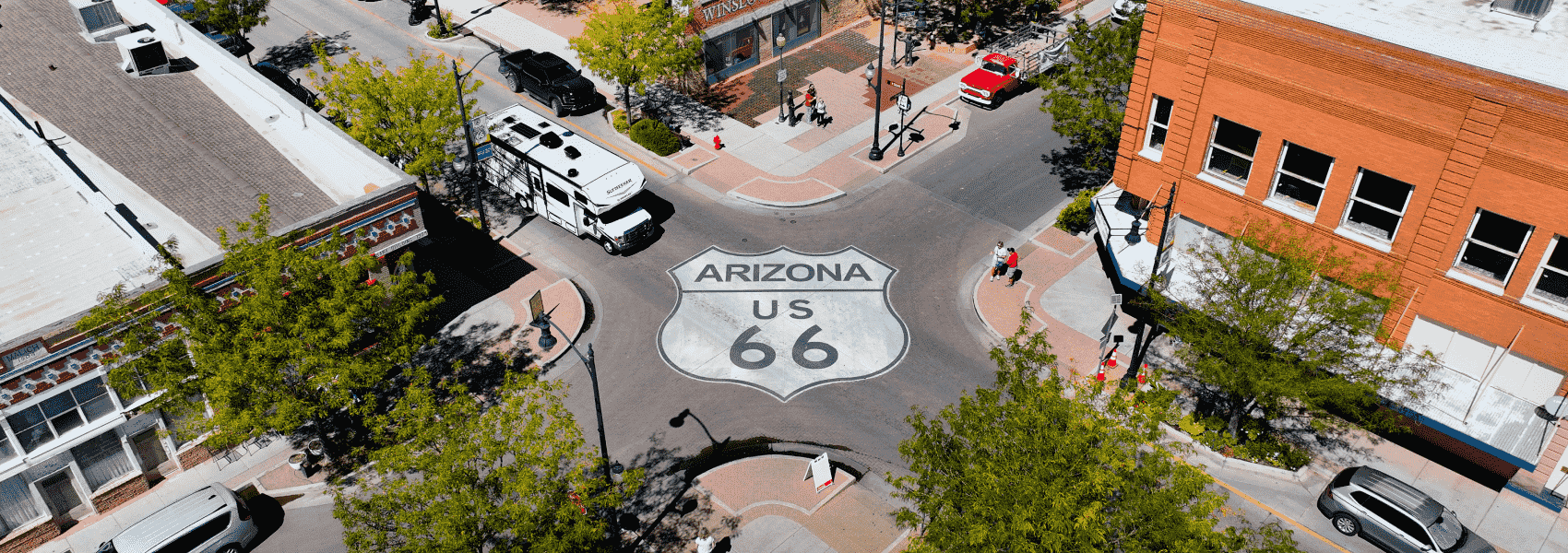
The La Posada Hotel, designed by Mary Colter in 1930, represents one of the Southwest's finest Fred Harvey Company hotels. The restored property preserves Spanish Colonial Revival architecture.
Route 66 climbs steadily toward Flagstaff, transitioning from desert scrub to ponderosa pine forests. Flagstaff sits at an elevation of 7,000 feet, surrounded by the world's largest ponderosa pine forest. The Lowell Observatory discovered Pluto here in 1930. Evening programs allow viewing celestial objects through historic telescopes.
Williams (30 miles west) was the last Route 66 town bypassed by Interstate 40 in 1984. The city embraced Route 66 heritage with renewed vigor. Williams serves as the southern terminus of the Grand Canyon Railway.
For those with time, the Grand Canyon's South Rim sits 60 miles north. This detour rewards visitors with one of Earth's most spectacular natural wonders.
Overnight: Williams/Circle Pines KOA
Day 9 Highlights
- Standin' on the Corner Park (Winslow, AZ)
- La Posada Hotel (Winslow, AZ)
- Lowell Observatory (Flagstaff, AZ)
- Historic downtown Williams (Williams, AZ)
- Grand Canyon South Rim (optional)
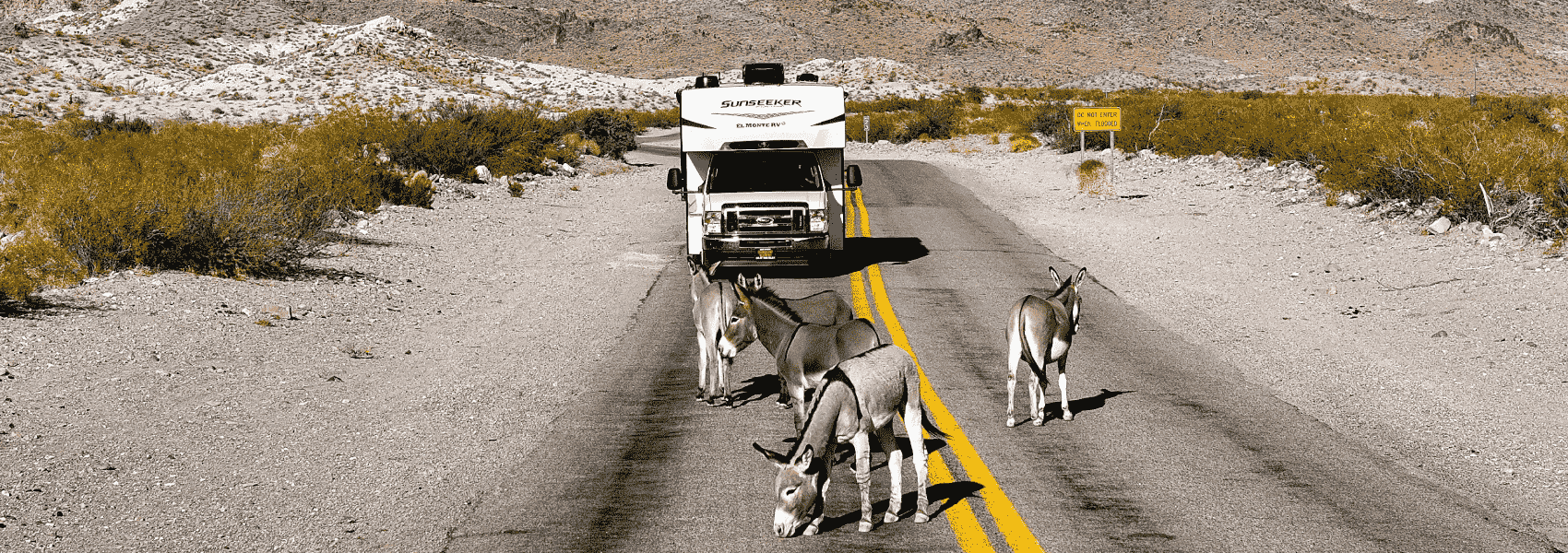
The road to Oatman climbs through the Black Mountains via tight switchbacks. Gold discoveries in 1902 created this boom town. Wild burros (descendants of miners' pack animals) roam Main Street, expecting carrots from visitors. RVs over 30 feet should bypass Oatman via Interstate 40.
Needles, California, marks the Golden State entry. The final stretch crosses the vast Mojave Desert. Joshua trees dot the landscape. Cajon Pass descends 3,000 feet from the high desert into the Los Angeles Basin.
Santa Monica represents the journey's end. The Santa Monica Pier extends into the Pacific. The official "End of the Trail" Route 66 sign marks the conclusion of 2,448 miles. Watch the sun set over the Pacific and reflect on the journey.
RV Return: El Monte RV Los Angeles Location
Day 10 Highlights
- Delgadillo's Snow Cap Drive-In (Seligman, AZ)
- Oatmanwild burros (Oatman, AZ)
- Santa Monica Pier (Santa Monica, CA)
Route 66 FAQs
Ten days provide excellent pacing. You'll average 245 miles daily with ample time for attractions and spontaneous discoveries.
New Mexico and Arizona deliver the most dramatic landscapes, but every state offers a unique appeal.
Yes, with exceptions. The Oatman road challenges RVs over 30 feet. Bypass via Interstate 40 if concerned.
Yes, especially for summer. Reserve KOA campgrounds 2–3 months in advance during peak season.
Absolutely. Roadside attractions, museums, and quirky stops engage children naturally. The 10-day pace prevents overwhelming kids.